


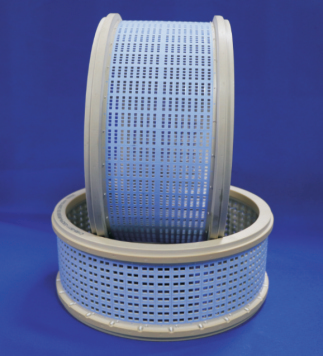
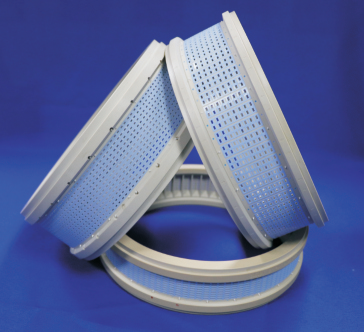
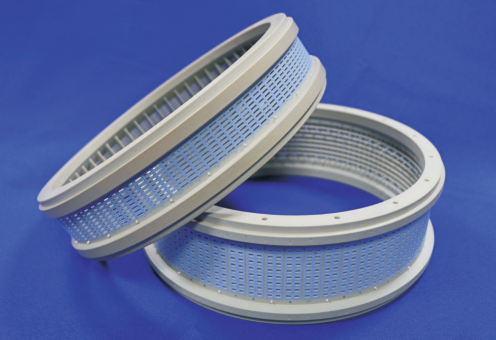
Outer diameter (diameter) of the wheel: It is one of the basic dimensions and is directly related to equipment space. The typical range is between 200mm and 400mm, with common specifications such as 250mm and 350mm.
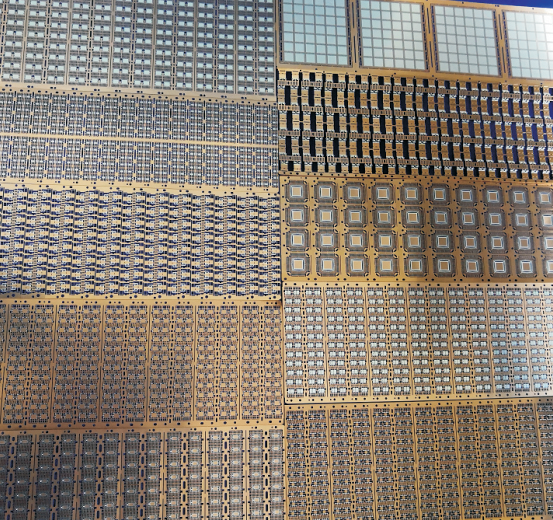
Wheel width: It must precisely match the width of the strip to be plated and the location of the area requiring electroplating.
Center hole diameter: It needs to be matched with the main shaft of the equipment to ensure concentricity and rotational stability.
Wheel body material: The core requirements are high strength, dimensional stability, chemical resistance, and electrical insulation. PEEK (polyetheretherketone) is the most mainstream choice as it ensures dimensional stability and durability for long-term use.
Shaft/sleeve material: Commonly stainless steel or titanium alloy, ensuring conductivity, strength, and wear resistance.
Characteristics of spot plating holes: The shape, size, quantity, and circumferential distribution of the holes must precisely correspond to the workpiece to be plated. In terms of design, the hole walls will feature conical surfaces and rounded corners to optimize the flow of the plating solution, and a main mounting slot will be provided for ease of assembly.
Positioning system: Ensures precise positioning of the material tape conveyor. For example, some designs utilize a positioning pin with a diameter of 0.6mm to pass through the positioning hole on the material tape for accurate positioning.
Electroplating speed/capacity: Wheel-type spot plating has a relatively fast speed, with a typical range of 10-16 m/min. High-end designs can reach up to 30 m/min, but this requires coordination with the electroplating process.
Plating area accuracy: It depends on the coordination between the mask and sealing, with errors controllable to ±0.1mm or even higher.
Electroplating area control: The core lies in the masking design. A layer of RTV (Room Temperature Vulcanizing Silicone Rubber) or silicone tape will be applied around the spot plating holes, utilizing its elasticity to press and seal the material tape, exposing only the area that needs to be electroplated.
Sealing material: RTV silicone rubber, silicone adhesive. The key lies in the line contact sealing, which means that at the moment of spot plating, the sealing material only forms a line of compression with the side of the terminal, achieving effective sealing, preventing the plating solution from penetrating to the back and contaminating the product, while reducing friction.
Internal flow channel design: The interior of the wheel body is typically equipped with chambers and flow equalizing slots. During spot plating, the electroplating solution is continuously injected into the chambers (to ensure replenishment and heat dissipation), and evenly distributed to each spot plating hole through the flow equalizing slots, ensuring consistent supply of solution to all plating positions.
Hole wall finish: To reduce crystallization blockage, the hole wall processing typically requires a surface finish of Ra0.8 or higher.